


Common HVAC Questions
Homeowners should familiarize themselves with the essential concepts and workings of heating and cooling systems to effectively operate and maintain their HVAC units. At Samsung, we are committed to exploring innovative solutions that enhance people’s comfort and well-being. That’s why we’ve created an HVAC FAQ section to provide the answers you’ve been searching for. Explore this resource to find solutions to common HVAC questions.
What is a heat pump?
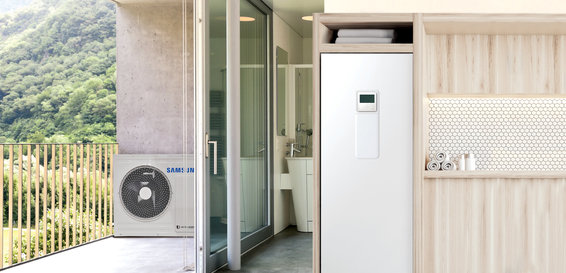
A heat pump is an air conditioning system, made up of an indoor fan coil (air handler) unit and outdoor compressor. The system provides both heating and cooling. The two most common types of heat pumps are air-source and ground-source. Air-source heat pumps are more popular for residential heating and cooling. In cooling mode, the indoor unit removes undesirable warmth and humidity from the air and transfers it outside. In heating mode, the cycle is reversed, and the outdoor compressor absorbs heat (even cold winter air contains heat) and releases it indoors.
What is a mini split?
A mini split is a heat pump system, also known as a ductless heat pump. A mini split serves as an alternative to radiator or baseboard heating, and as a replacement for cooling only window units. No duct work is needed. Instead, a head unit, or multiple head units, are mounted on an interior wall or ceiling, with an accompanying unit outside.
More HVAC Questions & Answers
In this HVAC FAQ section, we provide some general and more specific answers to questions on air conditioning that are intended to simplify the use of our HVAC systems.
What does HVAC stand for?
HVAC stands for Heating, Ventilation, and Air Conditioning.
What does HVAC stand for?
HVAC stands for Heating, Ventilation, and Air Conditioning.
What are the most common types of air conditioning products?
The most common types of air conditioning products are central ducted air conditioner, central ducted heat pump, ductless mini split, and multi-split.
What is a SEER rating?
SEER stands for Seasonal Energy Efficiency Ratio. A SEER rating determines the maximum efficiency of an air conditioning unit.
How often should I clean or replace my air filter?
You should clean or replace your air conditioning system’s filter every month or two, especially during heavy use months (winter and summer). Filters may need more frequent attention if the air conditioner is in constant use, is subjected to dusty conditions, or if you have fur-bearing pets in the home. A dirty filter will slow down air flow and make the system work harder to keep you warm or cool – wasting energy.
Why is energy efficiency important?
Energy efficiency is important because in an average size home, air conditioning consumes more than 2,000 kilowatt-hours of electricity per year. This causes the average power plant to emit about 3,500 pounds of carbon dioxide and 31 pounds of sulfur dioxide. Even if your air conditioner is only 10 years old, you may save 20% to 40% of your cooling energy costs by replacing it with a newer, more efficient model.
More HVAC Questions & Answers
Ductless mini split air conditioners work by using narrow refrigerant lines positioned outside your home to deliver heating and cooling. This is instead of conventional central heating and cooling which requires bulky and often expensive ductwork. Only a three-inch hole in an outdoor wall is needed for the refrigeration lines to connect the outdoor unit to the indoor unit. The outside unit extracts heat from the air, even when it’s cold. Refrigerant carries the heat directly to the head(s) inside, which then delivers heated air to the occupied space. In warmer months, the system works in reverse for quiet, efficient air conditioning.
Our Services Will Make Your Home Comfortable and Cozy
Got more questions?
Feel free to get in touch with our team if you have further questions, by submitting the form below.
